

Table of Contents
- Preparing the garment for dyeing clothes in the washing machine
- Fabrics Suitable for Machine Dyeing
- How to Dye Cotton in the Washing Machine: Dosage and Procedure
- Water Temperature and Wash Cycle Duration
- Fabric Color Fixative: How to Use It Correctly
- How to Clean Your Washing Machine After Dyeing
- Post-Dye Care: Rinsing and Maintaining Garments
- Conclusion
Last updated: August 12, 2026
Preparing the garment for dyeing clothes in the washing machine
Proper preparation of the garment is the key to achieving even and long-lasting color. Before beginning the machine-washing dyeing process, the fabric must be cleaned of dirt, sweat, and manufacturing residues that could prevent the dye from adhering properly to the fibers.
Wash the garment in lukewarm water with a mild detergent, without using fabric softeners, which create a protective barrier on the fibers. L prevents the dye from penetrating the fabric and causes uneven staining. Rinse thoroughly until the water runs completely clear. If the garment is new or very dirty, a more thorough pre-wash may be necessary.
A common mistake is to dry the garment completely before dyeing it. On the contrary, the fabric should be damp but not wet when you put it in the washing machine. L helps the dye distribute more evenly across the fibers, while excess water dilutes the dye bath and reduces the intensity of the final color.
For very delicate items or those with existing colors that might bleed, consider pre-treating them with a mild color fixative. Thorough preparation takes only 15–20 minutes but is key to the success of the entire process.
Fabrics Suitable for Machine Dyeing
Not all fabrics respond the same way to machine dyeing. Natural and semi-synthetic fabrics dye easily, while pure synthetics require special formulations or do not dye at all.
The best items to dye in the washing machine are:
- Cotton: absorbs dye quickly and evenly, perfect for beginners
- Wool: It takes dye easily, although it requires slightly lower temperatures to prevent felting.
- Silk: produces vibrant, luminous colors, but requires gentle care during the wash cycle
- Linen: Similar to cotton, it produces excellent results with rich colors
- Viscose and bamboo: semi-synthetic fibers that take dye very well
- Polyamide (nylon): accepts certain dyes, particularly those formulated for synthetic fabrics
Synthetic fabrics such as pure polyester, acrylic, and polypropylene cannot be dyed with standard dyes. If your garment contains polyester as the main fiber, the results will be disappointing. Always check the fabric label before purchasing dye.
One aspect that is often overlooked is the percentage of natural fibers in blends. A garment made of 70% cotton and 30% polyester will take the dye, but the color will be paler because only the cotton portion absorbs the dye. Blends with higher percentages of natural fibers (85–100%) produce significantly better results.
The fabric's weave is just as important. Densely woven fabrics like denim absorb dye more slowly than lightweight fabrics like jersey, which means they may require longer cycles to ensure even distribution.
How to Dye Cotton in the Washing Machine: Dosage and Procedure
Dyeing cotton in the washing machine is the simplest and most reliable way to achieve professional results at home. Cotton is the ideal fabric because its fibers have a porous structure that absorbs dye naturally and evenly.
Dye dosage:
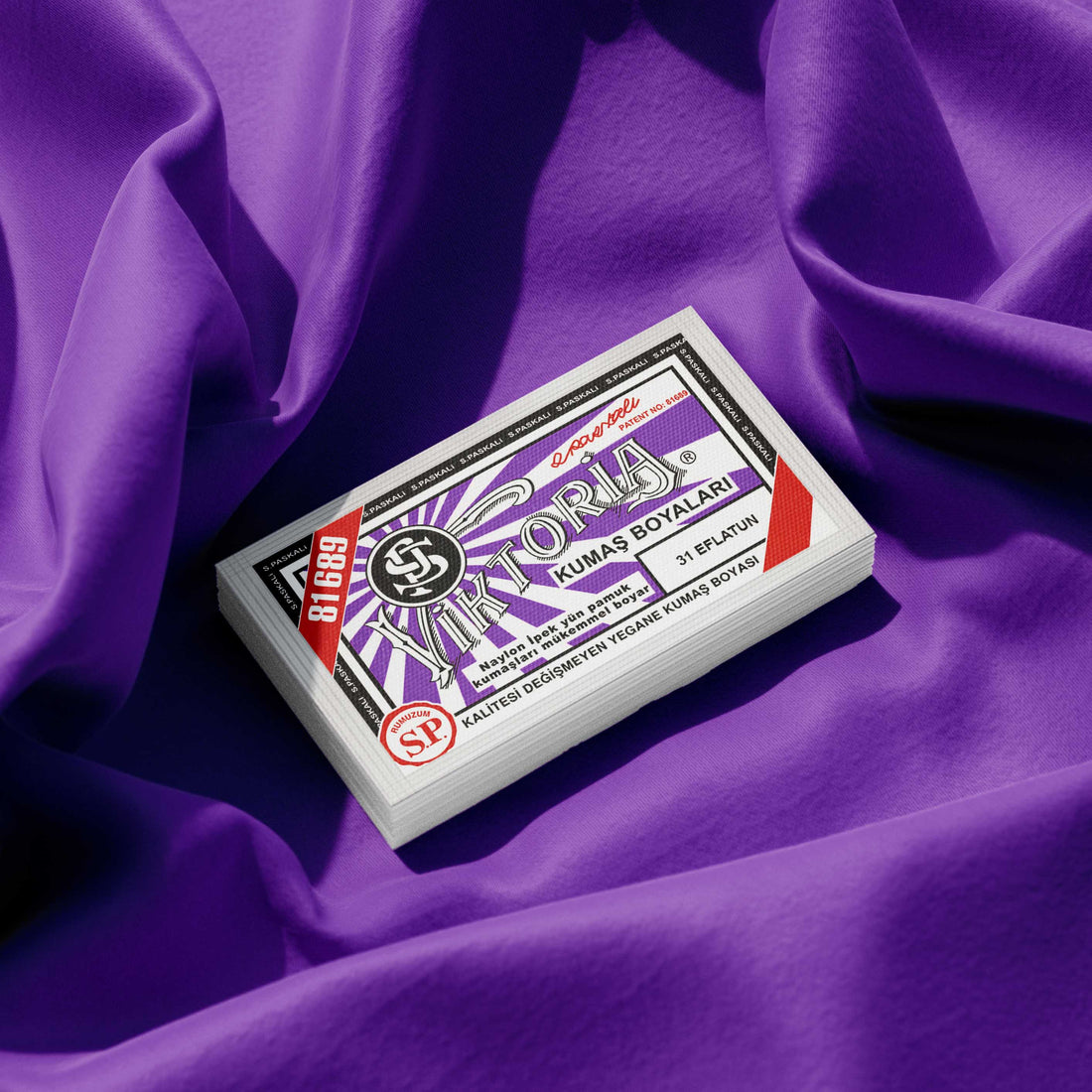
The amount of dye depends on the weight of the garment and the desired color intensity. As a general rule, use 1 packet of Aybel dye (such as the Bright Lilac Fabric Dye) for lightweight garments weighing up to 500 grams. For heavier garments or more intense colors, increase the amount to 1.5–2 packets.

Dissolve the powdered dye in warm water (40–50°C) before adding it to the washing machine. Do not pour the dry dye directly into the drum, as this may cause concentrated stains and uneven results. Stir well until the dye is completely dissolved and the liquid is uniform.
Step-by-step procedure:
- Prepare the garment: wash it and leave it slightly damp, as described in the previous section
- Prepare the dye bath: Dissolve the dye in hot water separately
- Load the washing machine: add the damp garment and pour the dissolved dye into the drum
- Add salt: pour 2–3 tablespoons of table salt into the drum to set the dye on the fibers (the salt helps the dye bind to the cotton)
- Set the cycle: Select a standard cotton cycle at 40–60°C for 45–60 minutes
- Monitor the process: during the first 15 minutes, the color should transfer from the dye bath to the fabric
- Complete the cycle: let the washing machine finish on its own
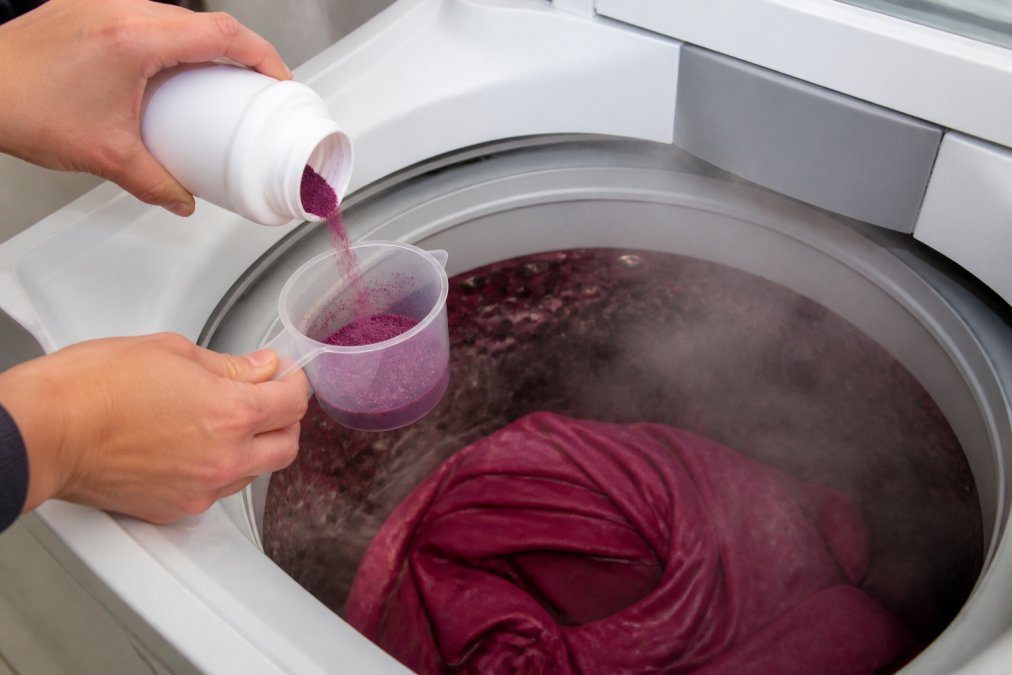
A practical tip that’s often overlooked: if the load is very large or heavy, it may not get enough agitation for even distribution. In this case, consider dividing the load into two separate loads or using a gentle cycle with extra agitation. Even L is the most critical factor in preventing uneven stains.
Water Temperature and Wash Cycle Duration
Water temperature and cycle duration are the key factors that determine both the intensity of the color and the quality of the dye job. Different temperatures produce visibly different results, and choosing the right one for your fabric is essential.
Recommended temperatures by fabric type:
- Cotton: 60°C for vibrant, even colors; 40°C for lighter shades
- Wool and silk: 40°C maximum to prevent damage to delicate fibers
- Linen: 60°C, similar to cotton
- Viscose and bamboo: 40–50°C to preserve the integrity of the fiber
Higher temperatures speed up dye transfer and produce more saturated colors, but they can damage delicate fabrics and consume more energy. Lower temperatures are gentler but require longer cycles to achieve the same result.
The cycle time should be at least 45–60 minutes for cotton. During the first 15–20 minutes, the dye is primarily transferred from the bath to the fabric. The remaining 25–40 minutes allow the dye to fully penetrate the fibers and set. Shorter cycles (30 minutes) produce pale and uneven colors, while longer cycles (90+ minutes) do not significantly improve the result but consume more water and energy.
One technical aspect that is often overlooked is the role of agitation. Modern washing machines with delicate cycles have less agitation, which is good for fragile fabrics but bad for the even distribution of dye. If you’re dyeing a delicate fabric, consider pausing the cycle halfway through, stirring the garment by hand, and then resuming the cycle. This simple step significantly reduces uneven staining.
Fabric Color Fixative: How to Use It Correctly
A color fixative is a chemical agent that stabilizes the bond between the dye and the textile fibers, increasing the color's resistance to washing and light. Using the fixative correctly is the difference between a color that lasts for months and one that fades after just a few washes.
Aybel'sFiske Fixative is specifically formulated to work in both the washing machine and when dyeing by hand, offering flexibility based on your preferences. The fixative should be added after the dye has had time to penetrate the fibers, generally during the last 10–15 minutes of the dyeing cycle.

How to use fabric softener in the washing machine:
- Calculate the correct dosage based on the garment's weight (follow the instructions on the package)
- Pour the fixative diluted in lukewarm water
- Add it to the drum during the last 10–15 minutes of the dyeing cycle
- Let the cycle run its full course
- Do not rinse immediately afterward; let the garment sit for 15–30 minutes before rinsing
A common mistake is adding the fixative too early. If the dye has not yet fully transferred to the fibers, the fixative can trap the dye in the dye bath instead of in the fabric, reducing the intensity of the final color. Always wait until the dye bath is visibly lighter before adding the fixative.
A color fixative is essential if you want long-lasting results. Dyes without a fixative tend to fade significantly after 5–10 washes. With the right fixative, the color retains its intensity for 50+ washes, making the investment in the fixative extremely cost-effective in the long run.
How to Clean Your Washing Machine After Dyeing
It is essential to thoroughly clean the washing machine after dyeing to prevent residual dye from staining subsequent loads. Even tiny amounts of dye left in the drum can transfer to white or light-colored clothes during the next cycle.
Cleaning Procedure:
- Remove the dyed piece: take it out and set it aside
- Run an empty rinse cycle: fill the drum with hot water (60°C) without adding anything, then start a complete wash cycle
- Check the drum: After the cycle, inspect the drum with a flashlight. If you still see traces of color, repeat the rinse cycle.
- Clean the detergent drawer: detergent residue can build up in the drawers and on the rails; rinse under running water
- Clean the gasket: Residual dye builds up in the rubber gasket; clean it with a damp cloth and mild detergent
For very intense dyes (such as reds and dark blues), you may need to run 2–3 rinse cycles to completely remove the residue. This isn't a waste of water; it's an investment in the quality of your future garments.
A practical tip: If your washing machine has an automatic cleaning cycle, use it after dyeing. This cycle is specifically designed to remove residue from the drum and internal pipes. If your washing machine doesn't have this feature, the manual rinse cycle is just as effective.
In high-efficiency (HE) washing machines with limited space, detergent residue can build up more easily. Pay special attention to cleaning the guides and sensors, as these are areas where detergent residue can accumulate and cause operational problems over time.
Post-Dye Care: Rinsing and Maintaining Garments
Proper rinsing after dyeing is crucial for stabilizing the color and removing excess, unbound dye. Inadequate rinsing results in color continuing to bleed during subsequent washes and a reduction in the vibrancy of the final color.
Rinsing procedure:
- Initial rinse in the washing machine: Run a gentle rinse cycle at 30–40°C without detergent
- Manual rinsing: Remove the garment and rinse it under cold running water until the water runs completely clear
- Check the rinse water: if the water is still discolored after 3–4 manual rinses, continue until it becomes clear
- Drying: Hang the garment to air-dry in a shaded area (direct sunlight may cause the new color to fade)
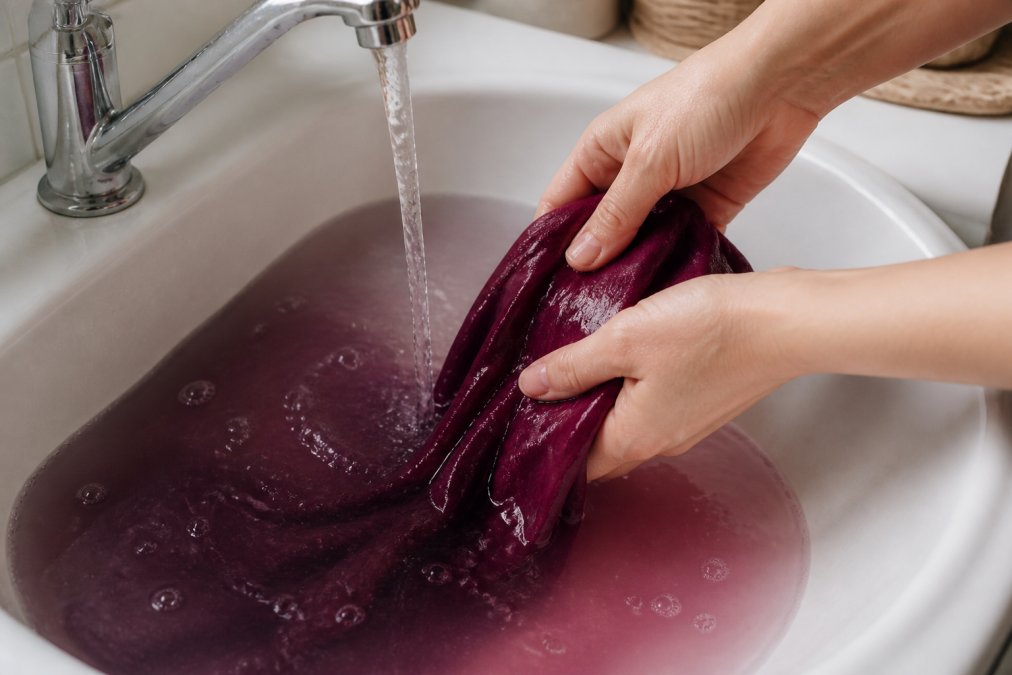
One aspect that is often overlooked is the temperature of the rinse water. Cold L closes the cuticles of the fibers and helps set the dye, while hot water reopens them and causes color loss. For this reason, the final rinse should always be done with cold water.
Long-term maintenance:
After dyeing, change your washing habits to preserve the color:
- Wash at low temperatures: 30°C for dyed garments, even if the fabric can withstand higher temperatures
- Use mild detergents: harsh detergents and bleach damage the dye
- Sort by color: Dyed items should be washed with other items of a similar color for at least the first 5 washes
- Avoid the dryer: excessive heat causes the colors to fade faster; air-dry whenever possible
- Protect from direct light: Direct sunlight will cause the color to fade over time
The first time you wash a dyed garment, you can add a tablespoon of white vinegar to the rinse cycle. L helps seal the dye into the fibers and further reduces fading in subsequent washes. This is a traditional tip that remains effective and does not damage the fabric.
If the garment starts to fade noticeably after several months, consider a light dyeing treatment to refresh the color. With Aybel, you can repeat the process using a slightly smaller amount of dye for a natural refresh without damaging the fabric.
Conclusion
Dyeing clothes in the washing machine is an accessible process that transforms faded or outdated garments into pieces that look brand-new, reducing textile waste and saving money compared to buying new clothes. By following the steps outlined here—from preparing the garment to the final rinse and long-term care—you’ll achieve professional-quality results and colors that last.
The key to success lies in attention to detail: the correct temperature, precise measurements, the right fixative, and thorough cleaning of the washing machine. These factors work together to ensure that the dye is distributed evenly and permanently sets into the fibers.
With Aybel products, such as the Bright Lilac Fabric Dye andFiske Fixative, you can achieve professional results without the complexity and cost of hand-dyeing. Get started today and discover how to extend the life of your favorite garments with vibrant, long-lasting colors.
Frequently Asked Questions
Which fabrics can be dyed in the washing machine?
Natural fabrics such as cotton, wool, silk, linen, and viscose respond very well to machine dyeing. Bamboo and nylon (polyamide) also take the dye well. Synthetic fabrics such as polyester and acrylic do not absorb dye in the same way. If the garment contains a blend of fibers, the final color will depend on the percentage of natural fibers present.
How can I set the color after dyeing to prevent it from fading?
After the dyeing process, use a fabric color fixative such as Aybel's Fiske Fixative to lock the pigment into the fibers. You can apply it directly in the washing machine or by hand, following the instructions. The fixative significantly increases the color’s resistance to subsequent washes, ensuring that the dye lasts longer.
Can fabric dye in the washing machine damage the appliance?
If you use the dye correctly and thoroughly clean the washing machine after the process, there is no risk of damage. Pigment residue can stain the drum if not rinsed out properly, but it does not damage the internal components. Always run a final cleaning cycle with hot water and a small amount of a detergent specifically designed for washing machines to remove all traces of dye.
What should I do if the dye doesn't take evenly on my clothes?
Uneven staining is often caused by improper preparation of the garment or an inaccurate measurement of the dye. Make sure the garment is evenly wet before adding the dye, dissolve the dye completely in hot water before adding the fabric, and ensure the garment has enough room to move around in the drum during the wash cycle.
Transform your faded clothes into pieces that look brand-new with Aybel. Our fabric dyes are formulated to distribute evenly in the washing machine, and Fiske Fixative ensures that the color lasts through dozens of washes. With a wide range of colors available and personalized support through photo consultations, Aybel makes at-home dyeing simple and reliable. Start your textile upcycling project today.
This article was written using GrandRanker